
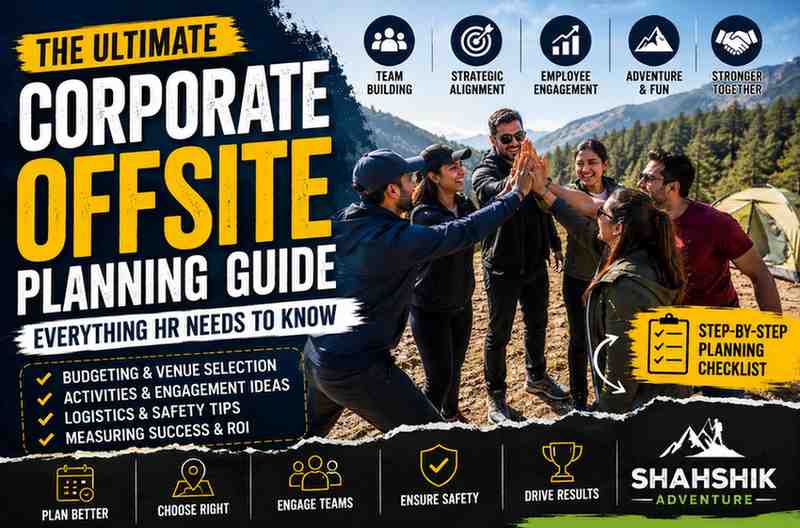
The Ultimate Corporate Offsite Planning Guide (2026): Everything HR Managers Need to Know
A successful company isn’t built only through meetings, reports, and performance reviews.
It’s built through people.
When employees trust one another, communicate openly, and work toward a shared goal, businesses grow faster and teams become stronger.
That’s why more organizations are investing in Corporate Offsites.
A well-planned corporate offsite isn’t just a day away from the office. It’s an opportunity to improve collaboration, strengthen relationships, discover future leaders, and build a positive workplace culture.
Whether you’re planning your first company retreat or organizing annual team-building events, this guide will help you create an offsite that delivers real business value.
What Is a Corporate Offsite?
A corporate offsite is an organized event where employees leave their regular workplace and participate in activities at an external location.
These events may last one day, a weekend, or several days depending on company goals.
Unlike office meetings, offsites provide a relaxed environment where employees can connect, learn, solve challenges, and collaborate without daily work distractions.
A successful corporate offsite usually combines:
- Team Building Activities
- Leadership Sessions
- Adventure Challenges
- Group Discussions
- Recreation
- Recognition Programs
- Strategic Planning
- Employee Wellness
Why Corporate Offsites Matter
Modern workplaces face several common challenges:
- Employees work in silos.
- Departments rarely collaborate.
- Communication gaps increase misunderstandings.
- New employees struggle to connect.
- Managers spend more time solving conflicts than building teams.
A corporate offsite addresses these issues by bringing employees together in a different environment where teamwork happens naturally.
Instead of talking about collaboration, employees actually experience it.
Benefits of Corporate Offsite Planning
Stronger Team Relationships
People often know each other’s job titles but not each other.
During an offsite, colleagues interact beyond work responsibilities.
Shared experiences create stronger personal connections that improve workplace collaboration.
Better Communication
Outdoor activities require constant communication.
Whether teams are solving puzzles or crossing obstacles, success depends on listening carefully and sharing ideas clearly.
These habits continue after returning to the workplace.
Leadership Development
Many employees have leadership potential that never appears during office meetings.
Adventure activities often reveal people who:
- Take initiative
- Solve problems calmly
- Encourage teammates
- Make quick decisions
- Handle pressure effectively
This helps HR identify future leaders.
Increased Employee Engagement
Employees who feel connected to their organization are generally more motivated and engaged.
Corporate retreats show employees that the company values their growth, well-being, and relationships—not just productivity.
Reduced Workplace Stress
A change of environment gives employees a mental break from routine work.
Outdoor experiences, fresh air, and physical activity can help reduce stress and improve morale.
Setting Clear Objectives
Before selecting a venue or planning activities, define the purpose of the offsite.
Ask questions like:
- Are we improving communication?
- Are we rewarding employees?
- Are we introducing new team members?
- Are we developing leaders?
- Are we planning company strategy?
- Are we improving collaboration between departments?
Your objective should guide every decision.
Choosing the Right Venue
The venue plays a major role in the success of your event.
Look for locations that offer:
- Easy accessibility
- Safe environment
- Comfortable accommodation
- Conference facilities
- Outdoor activity areas
- Medical support
- Reliable food services
- Adequate parking
Adventure resorts and nature-based venues often provide a better balance of learning and recreation than traditional hotels.
Indoor vs Outdoor Offsites
Indoor Offsite
Suitable for:
- Annual meetings
- Product launches
- Sales conferences
- Workshops
Advantages:
- Climate controlled
- Formal presentations
- Technology support
Limitations:
- Lower interaction
- Less movement
- Limited engagement
Outdoor Offsite
Suitable for:
- Team Building
- Leadership Development
- Employee Engagement
- Trust Building
- Adventure Learning
Advantages:
- Better collaboration
- Higher participation
- Stronger memories
- Natural teamwork
- Stress relief
Building the Perfect Corporate Offsite Schedule
A balanced agenda keeps employees engaged without feeling overwhelmed.
Morning
- Welcome session
- Icebreaker activities
- Goal setting
Mid-Morning
- Team challenges
- Leadership exercises
Lunch
- Networking
- Informal discussions
Afternoon
- Adventure activities
- Problem-solving games
- Communication exercises
Evening
- Awards
- Campfire
- Entertainment
- Reflection session
Team Building Activities That Work
Some of the most effective activities include:
- Treasure Hunt
- Rope Courses
- Zipline
- Rock Climbing
- River Crossing
- Obstacle Challenges
- Blindfold Trust Walk
- Raft Building
- Survival Games
- Leadership Rotation Challenges
Each activity should align with your objectives rather than simply providing entertainment.
Budget Planning
Every HR department works within a budget.
Plan expenses under these categories:
- Venue
- Transportation
- Accommodation
- Food
- Activities
- Trainers
- Safety Equipment
- Photography
- Emergency Fund
Investing in quality planning often provides better long-term value than choosing the lowest-cost option.
Transportation Planning
Smooth transportation creates a positive first impression.
Consider:
- Pickup points
- Travel time
- Rest stops
- Emergency contacts
- Driver coordination
Share the travel itinerary with employees in advance.
Accommodation Checklist
Choose accommodation that provides:
- Clean rooms
- Safe surroundings
- Reliable electricity
- Internet access if required
- Hygienic washrooms
- Comfortable sleeping arrangements
Employees who rest well participate better.
Food Planning
Food influences energy levels throughout the event.
Offer:
- Breakfast
- Lunch
- Evening snacks
- Dinner
- Drinking water
- Vegetarian options
- Vegan options
- Special dietary meals if needed
Healthy food supports active participation.
Safety First
Adventure should always be exciting—not risky.
Choose organizers that provide:
- Certified instructors
- Safety briefing
- First Aid
- Emergency response plan
- Quality equipment
- Insurance where applicable
Never compromise on participant safety.
Measuring Success
A successful offsite should create measurable outcomes.
Track:
- Employee feedback
- Participation rate
- Engagement scores
- Leadership observations
- Communication improvements
- Retention trends
- Productivity changes over time
Simple post-event surveys provide valuable insights for future planning.
Common Mistakes to Avoid
Many corporate offsites fail because of poor planning.
Avoid these common mistakes:
- No clear objectives
- Overloaded schedule
- Choosing the wrong venue
- Ignoring employee feedback
- Too many presentations
- Very little interaction
- Poor logistics
- No follow-up after the event
An offsite should inspire employees—not exhaust them.
Real Example
Imagine two software companies with similar teams.
The first company organizes an annual conference inside a hotel ballroom.
Employees attend presentations throughout the day and return home.
The second company plans a two-day adventure retreat.
Teams solve outdoor challenges, rotate leadership roles, participate in problem-solving games, and spend the evening sharing experiences around a campfire.
Back at work, the second team communicates more openly because they’ve already built trust outside the office.
The activities didn’t magically improve performance overnight—but they strengthened the relationships that make better teamwork possible.
Planning Timeline
8 Weeks Before
- Define objectives
- Set budget
- Shortlist venues
6 Weeks Before
- Confirm venue
- Finalize activities
- Arrange transportation
4 Weeks Before
- Collect participant details
- Confirm accommodation
- Prepare communication
2 Weeks Before
- Safety briefing
- Vendor confirmation
- Emergency planning
Event Week
- Share itinerary
- Final checklist
- Team assignments
After the Event
- Collect feedback
- Review outcomes
- Share photos
- Recognize participation
- Plan future improvements
Frequently Asked Questions
What is the ideal duration for a corporate offsite?
Most companies choose either a one-day offsite for local teams or a two-to-three-day retreat for leadership development and deeper engagement.
How many employees should participate?
Corporate offsites work well for teams of 20 to several hundred employees, provided activities are planned according to group size.
Are adventure activities safe?
Yes, when conducted by trained professionals using certified equipment, proper supervision, and established safety protocols.
What is the biggest benefit of a corporate offsite?
Improved trust, stronger communication, and better collaboration between employees.
A corporate offsite is more than a break from the office.
It’s an investment in people.
When employees face challenges together, celebrate successes together, and learn outside their usual environment, they return with stronger relationships and renewed motivation.
Companies that invest in meaningful experiences often build cultures where collaboration, leadership, and innovation grow naturally.
The most successful offsites are not remembered because of the venue or the food.
They’re remembered because they changed how people worked together.
Plan Your Next Corporate Offsite with Shahshik Adventure
At Shahshik Adventure, we design customized corporate offsites that combine adventure, leadership development, experiential learning, and team-building into one unforgettable experience.
Whether you need a one-day corporate outing, a leadership retreat, or a multi-day adventure camp, our experienced facilitators help organizations build stronger teams through meaningful outdoor experiences.
Let’s build stronger teams—one adventure at a time.